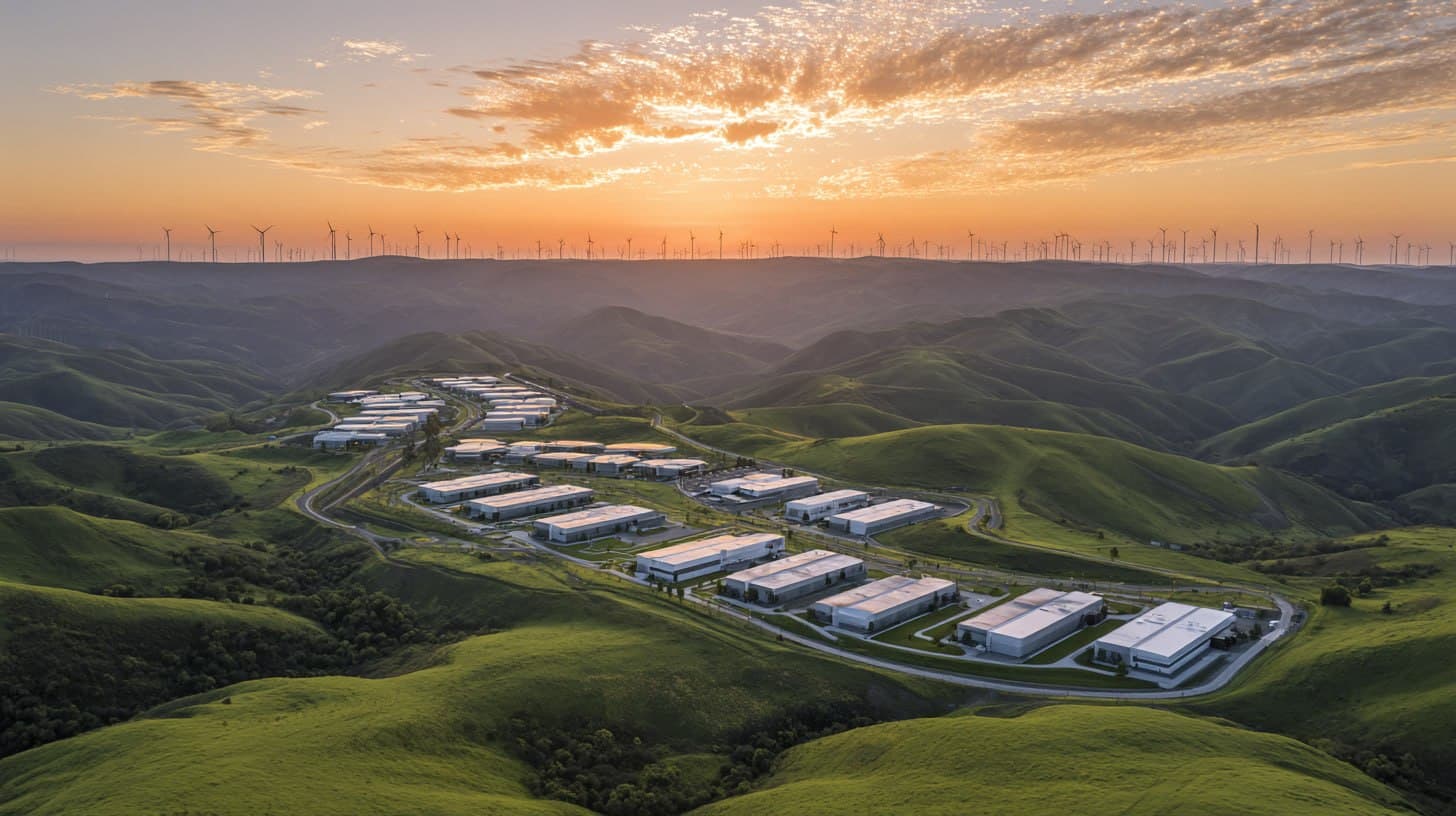
Brazilian data center developer Scala Data Centers is courting US and Chinese tech giants to anchor Scala AI City, a 5-gigawatt campus near Porto Alegre, with construction of the first phase slated to begin late this year.
The pitch positions Brazil as a neutral alternative for AI infrastructure at a moment when the March 2026 Iranian drone strikes on three AWS facilities in the UAE and Bahrain — and reported US and Israeli strikes on data centers inside Iran — are pushing hyperscalers (the largest cloud operators, including AWS, Microsoft Azure, Google Cloud, and Alibaba Cloud) to reassess geographic risk. Scala's willingness to host American and Chinese cloud providers in separate facilities on the same site also underscores how developers in politically non-aligned markets are turning strategic ambiguity into a commercial wedge.
A $500 million first phase, 5 GW approved
Senior Vice President Luciano Fialho told Bloomberg the first phase will cost Scala roughly $500 million in infrastructure spend, while an anchor hyperscaler would spend multiples of that on servers and high-performance chips. The project has secured approval for up to 5 gigawatts of power, roughly equal to the peak electricity demand of a city the size of São Paulo or London. Scala, backed by DigitalBridge Group, is also expanding a São Paulo campus toward 600 megawatts after investing about 12 billion reais, or $2.4 billion.
Renewables, incentives, and a pending SoftBank deal
Brazil's renewable energy base, dense fiber network, and interconnected grid underpin the pitch, alongside state-level incentives that contrast with mounting US community resistance to data center power and noise impacts.
SoftBank has agreed to acquire DigitalBridge for about $3 billion, a deal that would fold Scala into a broader Japanese push into AI infrastructure and sharpen competition for the hyperscaler tenant Scala is still seeking to name.
The Daily Crypto Integrated Newsletter
Stay updated on the latest crypto news across Ethereum, Solana, AI and Macro, distilled into a 2-minute read.
Delivered via Substack.