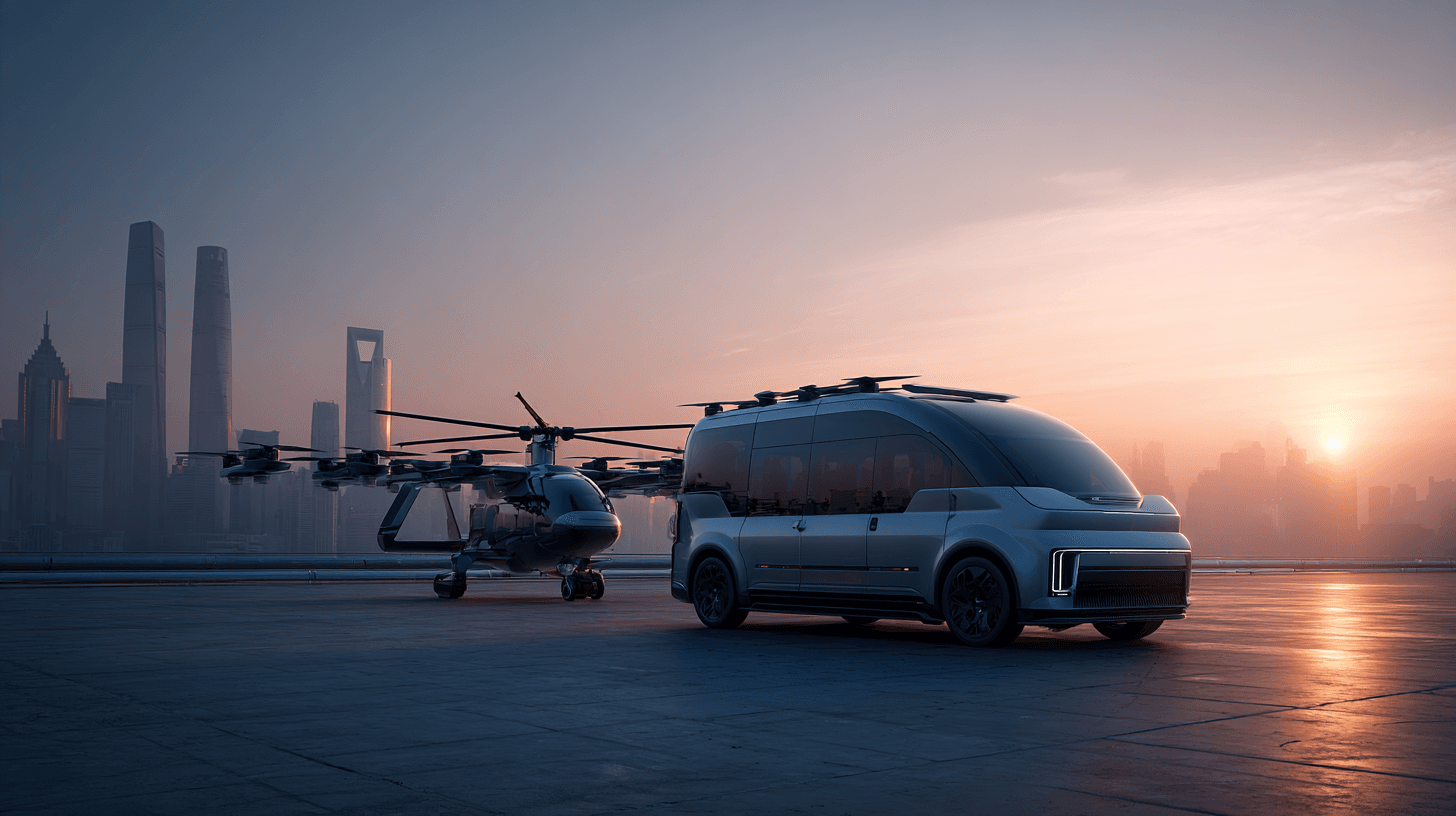
Chinese EV maker Xpeng expects large-scale deliveries of its two-part Land Aircraft Carrier eVTOL system to begin in 2027, president Brian Gu told Reuters on Thursday. The Xpeng flying car program is now producing pre-series units at a newly operational 120,000-square-meter factory in Guangzhou run by its Aridge subsidiary (an eVTOL, or electric vertical take-off and landing aircraft, is a battery-powered craft that takes off and lands like a helicopter but is designed for quieter, lower-cost short-range flight).
The Daily Crypto Integrated Newsletter
Crypto, AI, Ethereum and macro — distilled into a 2-minute read.
Delivered via Substack.
The timeline confirms Xpeng as the furthest-along Chinese entrant in the personal eVTOL race, but it also narrows the company's near-term commercial story to a niche use case — scenic and leisure flights — rather than the urban air mobility market that has attracted most Western competitors like Joby Aviation and Archer. Aridge's factory is designed for an initial capacity of 10,000 units per year at a 30-minute takt time (the pace at which one finished unit rolls off the line), a throughput that far exceeds current demand signals and hinges on Chinese aviation authorities clearing the aircraft for civilian operation.
Inside the Land Aircraft Carrier eVTOL System
The system pairs a six-wheeled, 800-volt extended-range electric van with over 1,000 km of range and a detachable two-seat, six-rotor eVTOL that stows in the rear. The aircraft weighs roughly 700 kg, carries about 50 kWh of batteries at 255 Wh/kg energy density, cruises at 130 km/h, and recharges from 30% to 80% in 18 minutes off the ground vehicle's pack, according to Xpeng's official product page.
The package is priced at around 2 million yuan (~$300,000), and Aridge has booked roughly 7,000 pre-orders, mostly in China. Xpeng's Hong Kong-listed shares (9868.HK) closed up 2.1% on the day of Gu's Reuters interview, according to Yahoo Finance data.
How Aridge Fits Xpeng's Broader Bet
Aridge raised $200 million in a Series A1 round in March, and Xpeng has flagged plans to spin the unit out publicly. Battery supplier CALB began mass production of aviation cells for the program the same month, per a company announcement.
Gu said the Chinese eVTOL manufacturer is also preparing robotaxi trials in Guangzhou this year and mass production of humanoid robots in Q4 2026 — a parallel buildout that signals Xpeng is positioning beyond passenger EVs before its core auto business matures overseas. "We are building toward a future where mobility is not limited to the ground," Gu said in comments to Reuters.